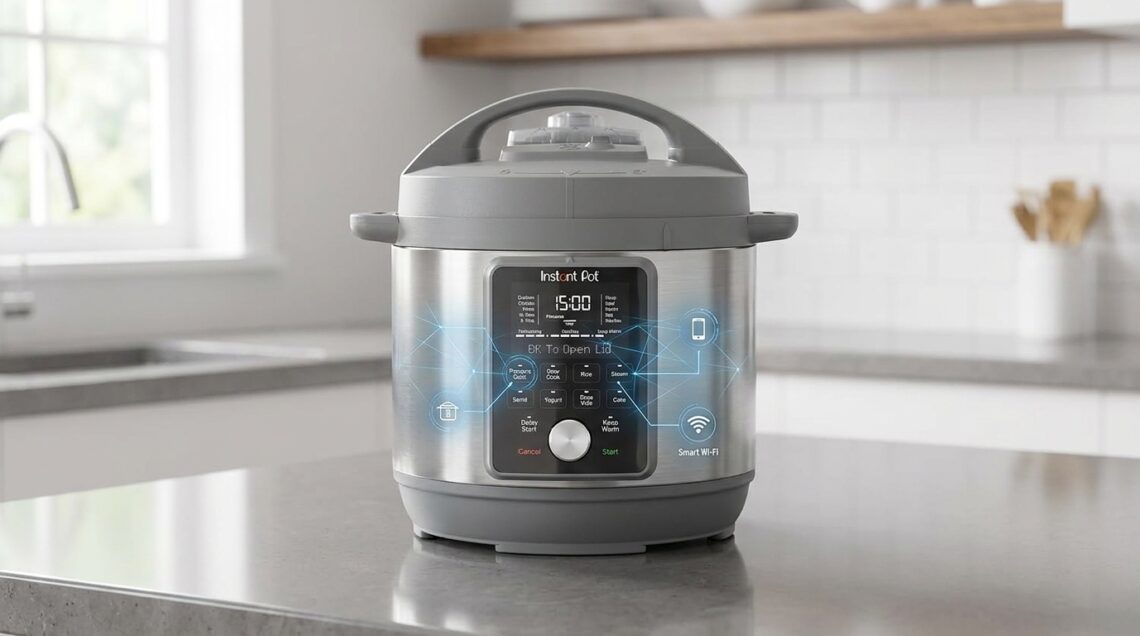
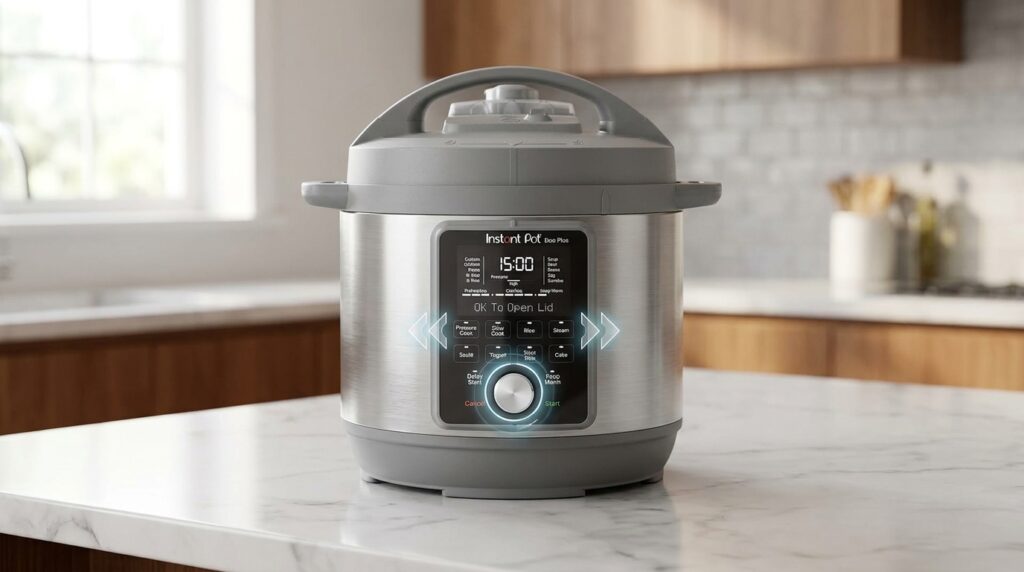
Kitchen appliances have a way of piling up in cabinets, each one designed for a single, narrow purpose. A rice cooker sits next to a slow cooker, which sits next to a pressure cooker, which sits next to a yogurt maker that hasn’t been touched in months. The appeal of multi-cooker devices comes largely from solving this exact problem: consolidating several appliances into one unit that doesn’t demand its own shelf. The Instant Pot Duo Plus, in its 8-quart configuration, is one example of this category, combining nine cooking functions into a single stainless steel pot designed for larger households or people who cook in batches.
This article walks through what the appliance actually does, how it might fit into different kitchens, and what to think about before deciding whether it makes sense for your own cooking habits.
What the Instant Pot Duo Plus Actually Is
At its core, the Duo Plus is an electric pressure cooker. Pressure cooking works by trapping steam inside a sealed pot, which raises the internal pressure and allows liquid to reach temperatures higher than a standard boiling point. This speeds up cooking considerably, particularly for foods that normally take a long time to soften, like dried beans, tough cuts of meat, or whole grains.
But calling it “just a pressure cooker” undersells what the device is built to do. Instant Pot markets this model as a 9-in-1 appliance, meaning the same pot and heating base can be reconfigured through software settings to behave like several different kitchen tools. Rather than physically swapping parts, you’re selecting a different program on the control panel, and the appliance adjusts temperature, pressure, and timing accordingly.
The “Whisper Quiet” branding refers to a redesigned steam release system, which is intended to reduce the loud hissing noise commonly associated with pressure cookers when they vent steam. This can matter more than it sounds like it would, especially in smaller homes or apartments where a loud kitchen appliance can be disruptive, particularly at odd hours or around sleeping children.
Key Features
Nine Functions in One Housing
The nine advertised functions typically include pressure cooking, slow cooking, rice cooking, steaming, sautéing, yogurt making, warming, sterilizing, and a general cooking mode sometimes marketed separately. Each of these functions adjusts the internal cooking parameters rather than requiring different physical attachments, which is part of what allows the device to replace multiple single-purpose appliances.
- Pressure cooking handles foods that benefit from high heat and trapped steam, such as stews, dried legumes, or bone broth.
- Slow cooking mimics the low, extended heat of a traditional slow cooker, useful for dishes that develop flavor over many hours.
- Rice cooking is calibrated for grains, adjusting time and temperature so rice doesn’t overcook or stick.
- Steaming uses a separate rack or basket (often included or sold separately) to cook vegetables, dumplings, or fish without submerging them in liquid.
- Sautéing allows browning or reducing sauces directly in the pot before switching to another function, which cuts down on dishes since you’re not moving food between a stovetop pan and the pressure cooker.
- Yogurt making maintains a low, consistent temperature over an extended period, which is what’s needed for culturing dairy.
- Warming keeps finished food at a safe serving temperature without continuing to cook it.
- Sterilizing uses high heat, often for baby bottles, canning jars, or other kitchen items that need to be sanitized.
8-Quart Capacity
The 8-quart size sits on the larger end of Instant Pot’s lineup, which typically ranges from 3 quarts up to 8 or occasionally larger. This capacity is generally positioned toward larger families, people who meal prep in bulk, or anyone who regularly cooks for gatherings. It’s worth noting that a larger pot isn’t automatically better for everyone; more on that in the sizing section below.
Stainless Steel Inner Pot
The inner cooking pot is stainless steel, a material generally preferred over non-stick coatings by people concerned about coating wear over time or exposure to certain non-stick chemicals during high-heat cooking. Stainless steel is also generally more durable against scratching from metal utensils, though it can require a bit more effort to clean when food sticks, particularly after sautéing.
Companion App with Recipe Access
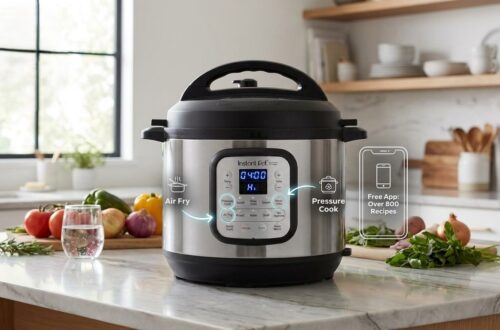
Instant Pot offers a companion app that reportedly includes access to a large recipe library, cited at over 800 recipes for this product. The app is intended to guide users through recommended settings for specific dishes, which can shorten the learning curve for people unfamiliar with pressure cooking. It’s a helpful feature for beginners who might otherwise be uncertain about appropriate cook times or liquid ratios.
Safety Mechanisms
Electric pressure cookers in general, and this model specifically, tend to include multiple layered safety features: locking lids that won’t open under pressure, pressure release valves, overheat protection, and sensors that monitor internal temperature and pressure throughout the cooking cycle. These are standard across most modern electric pressure cookers and are part of why they’ve become more common in everyday kitchens compared to older stovetop pressure cookers, which required more manual attention.
How It Can Be Used
Because the appliance covers several cooking styles, it tends to get used differently depending on the household. Below are some general use cases people commonly associate with multi-cookers of this type.
Weeknight meals: Pressure cooking significantly reduces cook times for dishes that would otherwise take an hour or more on the stovetop, such as chili, risotto, or braised meats. This can make it appealing for people trying to get dinner on the table after a long workday.
Batch cooking and meal prep: The 8-quart size lends itself to preparing large quantities of grains, beans, or soups at once, which can then be portioned out and refrigerated or frozen for the week.
Dried beans without soaking: One of the more practical applications of pressure cooking is preparing dried beans without an overnight soak, since the elevated pressure softens them in a fraction of the usual time.
Homemade yogurt: The yogurt setting allows people to culture their own yogurt at home, which can be a way to control ingredients and avoid added sugars found in some store-bought options.
Steaming vegetables or seafood: Using the included or separately purchased steaming rack, the appliance can prepare vegetables or fish without submerging them, preserving texture and nutrients better than boiling in some cases.
Slow-cooked dishes: For people who already enjoy slow cooker meals, like pulled pork or pot roast, the slow cook function offers a similar result without needing a separate appliance taking up counter space.
Sterilizing equipment: Parents preparing baby bottles or home brewers sterilizing jars have used the sterilize function for this purpose, cutting down on the need for a dedicated sterilizer.
Reheating and holding food warm: For gatherings or potlucks, the warm function can keep a dish at serving temperature for a period of time without the food drying out or continuing to cook.
Who It May Be Suitable For
Multi-cookers like this one tend to appeal to a fairly broad range of people, but there are some groups it may suit particularly well.
Larger households or families: The 8-quart capacity is generally intended for cooking larger portions, which fits households of five or more, or people who like having leftovers on hand.
People consolidating kitchen appliances: If counter space or cabinet storage is limited, replacing several single-function devices with one multi-cooker can be appealing, even if each individual function isn’t necessarily as specialized as a dedicated appliance.
Beginner cooks: The companion app and pre-programmed settings can lower the learning curve for people who are newer to cooking or unfamiliar with pressure cooking specifically.
Meal preppers: Anyone who cooks in bulk on a set day of the week may find the larger capacity and multiple functions useful for preparing grains, proteins, and vegetables in a single session.
People interested in reducing hands-on cooking time: Since pressure cooking and slow cooking are both largely hands-off after the initial setup, this appliance can suit people who want to start a meal and step away rather than monitoring a stovetop.
That said, it may be less necessary for people who live alone, cook in small quantities, or already own several of the individual appliances it’s designed to replace. In those cases, a smaller capacity model, or simply continuing to use existing appliances, might be more practical.
Important Things to Consider
No appliance is a universal fit, and there are a few practical points worth thinking through before deciding on this particular model.
Counter and Storage Space
While the appliance is designed to replace multiple devices, an 8-quart pot is still a fairly large item. It’s worth measuring available counter or cabinet space beforehand, particularly if storage is limited in your kitchen.
Learning Curve for Pressure Cooking
Even with app guidance, pressure cooking has its own learning curve compared to more familiar cooking methods. Understanding concepts like natural pressure release versus quick release, appropriate liquid ratios, and adjusting recipes originally written for stovetop or oven cooking can take some trial and error early on.
Function Overlap and Trade-offs
Multi-function appliances involve some inherent trade-offs. A dedicated rice cooker, for instance, may offer more nuanced settings for different rice varieties than a multi-cooker’s general rice function. Similarly, a standalone yogurt maker might allow for more precise temperature control. Whether this matters depends on how particular you are about results in each individual function.
Maintenance and Cleaning
The stainless steel inner pot, sealing ring, and steam release components all require regular cleaning. The sealing ring in particular is known to absorb odors from strongly flavored dishes over time, and some users choose to keep a second ring on hand for sweet versus savory cooking to avoid flavor transfer.
Capacity Considerations
An 8-quart model is on the larger side. For smaller households, a 6-quart or smaller version within the same product line might be more appropriately sized, both in terms of food quantity and physical footprint on the counter.
Comparing General Appliance Categories
Rather than comparing specific competing products, it can be more useful to compare categories of kitchen appliances so you can decide where a multi-cooker like this one fits.
Multi-cookers versus single-function appliances: A multi-cooker consolidates several functions into one unit, generally saving space and, over time, potentially cost compared to buying each appliance separately. Single-function appliances, on the other hand, are often more specialized and may perform their singular task with more consistency or precision, since they aren’t designed to accommodate multiple cooking styles.
Electric pressure cookers versus stovetop pressure cookers: Stovetop pressure cookers generally reach higher pressures and can cook slightly faster, but they require more direct attention and manual pressure regulation. Electric versions, including this one, tend to be more hands-off and include more built-in safety mechanisms, though they may take a bit longer to reach pressure due to the initial heat-up phase.
App-connected appliances versus standalone appliances: Devices with companion apps, like this one, can offer guided cooking programs and recipe suggestions, which may benefit less experienced cooks. Standalone appliances without app integration rely more on printed manuals or independent recipe research, which some experienced cooks may actually prefer for its simplicity.
Frequently Asked Questions
Does the 8-quart size mean it takes up significantly more counter space than smaller models? Generally, yes. Larger capacity models are physically bigger, both in diameter and height, so it’s worth checking product dimensions against your available space before purchasing.
Can this appliance replace a dedicated slow cooker entirely? It includes a slow cook function designed to replicate the low, extended cooking style of a standalone slow cooker. Whether it fully replaces one depends on how frequently you use slow cooking and how particular you are about matching a dedicated appliance’s performance.
Is the sealing ring likely to retain odors from cooking? Silicone sealing rings on pressure cookers are generally known to absorb odors over repeated use, particularly from strongly spiced or pungent dishes. Regular cleaning helps, and some people use separate rings for sweet and savory cooking.
Do I need the companion app to use the appliance? No, the appliance can be operated using its built-in control panel and preset programs without the app. The app is generally offered as an additional resource for recipes and guided cooking rather than a requirement for basic operation.
Is this model dishwasher safe? Certain components, such as the inner pot, lid, and sealing ring, are often dishwasher safe on many Instant Pot models, though it’s advisable to check the specific care instructions included with this product before assuming so.
How long does it typically take for the appliance to reach pressure? This varies based on the volume and temperature of food and liquid inside, but electric pressure cookers generally take longer to reach pressure than stovetop versions, sometimes ten minutes or more before the actual cooking timer begins.
Final Thoughts
The Instant Pot Duo Plus 8-Quart represents a fairly comprehensive approach to kitchen consolidation, bringing together pressure cooking, slow cooking, steaming, sautéing, and several other functions into one stainless steel unit. Its larger capacity and companion app make it a reasonable option to look into for bigger households, batch cooking, or anyone hoping to simplify a cluttered kitchen setup. At the same time, it’s worth weighing the appliance’s size, the learning curve associated with pressure cooking, and whether a smaller capacity model might better match your typical cooking volume.