Kitchen counters have become crowded battlegrounds. Between air fryers, pressure cookers, slow cookers, and grills, many households find themselves juggling multiple single-purpose appliances that each demand their own storage space, cleaning routine, and learning curve. The NuWave Duet enters this landscape with a different proposition: consolidate several cooking methods into one countertop unit built around interchangeable lids.
This article walks through what the NuWave Duet actually offers, how people commonly use appliances like it, who tends to benefit most from this kind of multicooker, and what to think about before bringing one into your kitchen. The goal here isn’t to convince you of anything—it’s to give you a clear, balanced picture so you can decide whether it fits your cooking habits.
What Is the NuWave Duet?
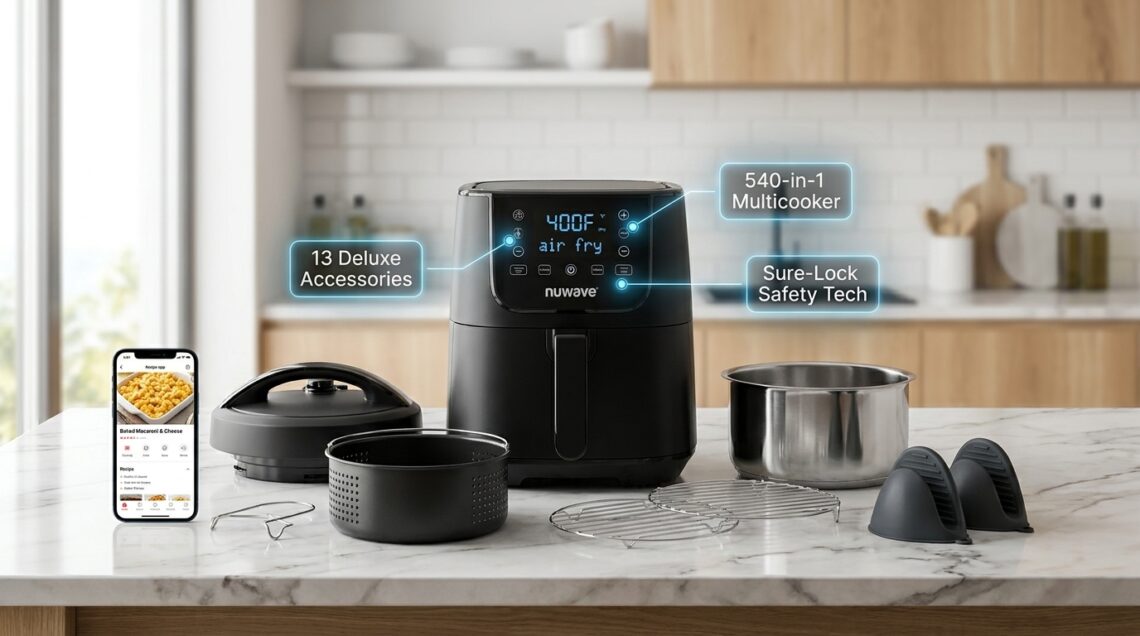
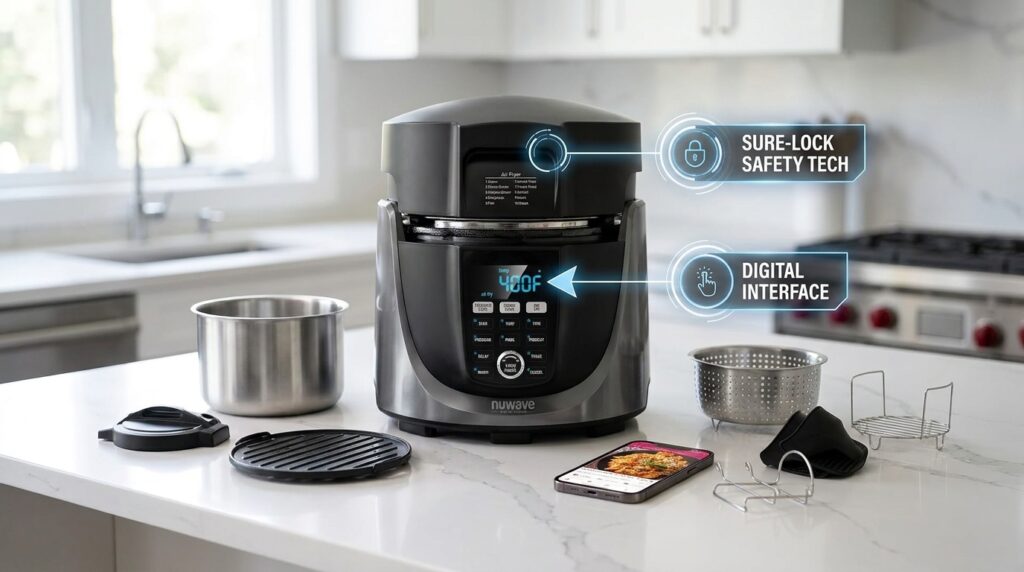
The NuWave Duet is a combination cooking appliance built around a central cooking pot with three interchangeable lids, each enabling a different cooking style. Rather than owning a separate air fryer, pressure cooker, and grill, the idea is that one base unit can transition between these functions depending on which lid is attached.
The system is marketed with a “540-in-1” descriptor, which refers to the wide range of cooking method and setting combinations available across its various functions—air frying, pressure cooking, grilling, slow cooking, sautéing, dehydrating, and more—rather than 540 distinct pre-programmed recipes. Understanding this distinction matters, because it reflects the flexibility of the system rather than a literal recipe count.
At its core, the appliance includes an 18/10 stainless steel inner pot, a material commonly chosen in cookware for its corrosion resistance and even heat distribution. The unit also incorporates what NuWave calls “Sure-Lock” safety technology, a locking mechanism designed to keep the lid securely sealed during pressure cooking, which is a critical safety consideration for any electric pressure cooker.
Key Features
Three Interchangeable Lids
The defining characteristic of the Duet is its lid system. Instead of one fixed lid, the appliance ships with three separate lids, each unlocking a different cooking mode:
- A pressure cooking lid, which seals the pot for high-pressure cooking, useful for foods that traditionally take a long time to tenderize, such as tougher cuts of meat, dried beans, or grains.
- An air fryer/grill lid, which typically houses a heating element and fan system to circulate hot air for crisping and browning, while also enabling grill-style cooking with higher, more direct heat.
- A third lid (often a glass or tempered lid) suited for slow cooking, sautéing, or simply monitoring food as it cooks without needing to lift a heavier lid.
This modular approach is the appliance’s main differentiator. Instead of buying three or four separate machines, the idea is that a single base unit and pot can serve multiple purposes by swapping the lid.
Sure-Lock Safety Technology
Pressure cookers, by nature, involve trapped steam and elevated internal pressure, so safety mechanisms are an important design element. The Sure-Lock system is intended to prevent the lid from being opened while the pot is still pressurized, and to ensure a secure seal during cooking. This kind of interlock is standard across reputable pressure cooker designs, and it’s worth understanding how it functions before first use by reviewing the included instruction manual carefully.
18/10 Stainless Steel Cooking Pot
The inner pot is made from 18/10 stainless steel, a grade that refers to the alloy’s composition (18% chromium, 10% nickel). This type of steel is commonly used in cookware because it resists rust, doesn’t react with acidic foods the way some other metals might, and tends to hold up well over repeated use and washing. A stainless pot also typically means it’s compatible with more cleaning methods, including dishwasher use, though checking manufacturer guidance for your specific model is always sensible.
Multiple Cooking Functions in One Unit
Based on the combination of lids and internal programming, the Duet is designed to handle:
- Air frying — circulating hot air to create a crisp exterior on foods with less oil than traditional deep frying
- Pressure cooking — using steam pressure to cook food faster than conventional methods
- Grilling — applying higher, more direct heat for a seared or charred finish
- Slow cooking — low, extended heat over several hours, useful for stews, soups, and braises
- Sautéing — direct pot-level heat for browning aromatics or searing meat before other cooking steps
- Dehydrating — low, consistent heat over a long duration to remove moisture from fruits, vegetables, or meats for snacks like jerky or dried fruit
Having these functions built into one appliance can be appealing for people who want cooking versatility without a cluttered kitchen.
Included Accessories
The Duet comes with a set of accessories—commonly cited as 13 pieces—which may include items like a steaming/frying basket, a rack, skewers, silicone mitts, a measuring cup, and other pot inserts. These accessories are generally designed to expand what you can cook without needing to purchase separate tools immediately. It’s worth reviewing the specific accessory list on the product page, since exact inclusions can vary by bundle or retailer.
How It Can Be Used
Multicookers like the NuWave Duet tend to shine in several everyday cooking scenarios. Here’s a look at practical ways this type of appliance is generally used.
Weeknight Meal Preparation
One of the more common draws to combination pressure cookers and air fryers is speed. Pressure cooking can significantly reduce cooking time for foods that would otherwise take hours on a stovetop or in an oven—think dried chickpeas, pot roasts, or risotto. For a household trying to get dinner on the table after a long day, this kind of time savings can be meaningful.
Batch Cooking and Meal Prep
Because the pot is a reasonably large capacity vessel, appliances in this category are often used for batch cooking—preparing a large pot of soup, chili, or grains at once, then portioning it out for the week. The slow cook function, in particular, lends itself to “set it and walk away” cooking, where you can start something in the morning and return to a finished meal later.
Achieving Crispy Textures Without Deep Frying
Air fryer functionality has become popular largely because it offers a way to get a crispy, browned exterior on foods like chicken wings, roasted vegetables, or frozen snacks using significantly less oil than deep frying. This can be appealing to people looking to reduce oil consumption in their cooking without giving up textures they enjoy.
Grilling Indoors
The grill lid function allows for indoor grilling, which can be useful during colder months, in apartments without outdoor grill access, or simply for convenience. While indoor grilling won’t fully replicate the smoky flavor of an outdoor charcoal grill, it can produce seared, caramelized results on proteins and vegetables.
Dehydrating Snacks
The dehydrating function opens up possibilities for homemade dried fruit, vegetable chips, or jerky. This is a feature that standalone air fryers often lack, so its inclusion here may appeal to people interested in preserving food or making snacks without added preservatives.
Sautéing as a Prep Step
Many recipes—especially soups, stews, and braises—benefit from browning ingredients like onions, garlic, or meat before adding liquid and switching to a slow or pressure cook function. Having a built-in sauté function means this step can happen in the same pot, reducing the number of dishes used.
Who It May Be Suitable For
Not every kitchen tool fits every cook the same way, so it’s worth thinking through who tends to get the most value from a combination multicooker like this.
People With Limited Kitchen Space
For those living in smaller homes, apartments, or spaces with limited counter and cabinet storage, consolidating multiple appliances into one unit can be a practical way to save space. Instead of storing an air fryer, a pressure cooker, and a slow cooker separately, one appliance with interchangeable lids may take up meaningfully less room.
Households That Cook Frequently But Have Limited Time
Busy families, professionals with long workdays, or anyone juggling a demanding schedule may appreciate the time-saving potential of pressure cooking combined with the “walk away and let it cook” nature of slow cooking and air frying.
Home Cooks Who Enjoy Experimenting
Because the appliance covers such a wide range of cooking styles, it may appeal to people who like trying new recipes or techniques—someone who wants to attempt homemade yogurt one week, beef stew the next, and dehydrated fruit snacks after that.
Those New to Pressure Cooking
Electric pressure cookers with built-in safety mechanisms, programmable settings, and simplified interfaces can be a more approachable entry point for people who are wary of traditional stovetop pressure cookers but are curious about the cooking method.
Who Might Want to Think Twice
On the other hand, this style of appliance may not suit everyone. Cooks who already own several single-purpose appliances they’re satisfied with might not see enough added value in consolidating. Similarly, people who cook mostly simple, quick meals (think toast, eggs, or basic stovetop dishes) may not use the more elaborate functions often enough to justify the investment. And because it’s a larger, multi-part appliance, kitchens with very limited storage for the unit itself and its accessories should factor that into the decision.
Important Things to Consider
Before purchasing any multi-function appliance, a bit of due diligence goes a long way. Here are some practical points worth thinking through.
Learning Curve
Appliances that do many things often come with more settings, buttons, and modes to learn than single-purpose tools. It’s worth budgeting some time early on to read through the manual, understand each lid’s function, and get comfortable switching between modes before relying on the appliance for a big meal or gathering.
Storage of Multiple Lids and Accessories
While the Duet consolidates several appliances into one base unit, it still comes with three lids and over a dozen accessories. Depending on your kitchen storage situation, you’ll want a dedicated space—like a deep drawer or shelf—to keep everything organized and easy to find.
Cleaning and Maintenance
Stainless steel pots are generally easy to clean, but components like silicone gaskets (common in pressure cooker lids), fan assemblies (in air fryer lids), and various accessories may each have different cleaning instructions. Checking whether parts are dishwasher-safe versus requiring hand-washing can save time and prevent premature wear.
Capacity Needs
Multicookers come in a range of sizes, and it’s worth confirming the pot’s capacity against your typical cooking needs—whether you’re cooking for one or two people, or regularly preparing meals for a larger household or for meal prepping in bulk.
Safety Practices for Pressure Cooking
Even with built-in safety features like Sure-Lock, pressure cooking involves trapped steam and requires following manufacturer instructions closely—particularly around not opening the lid before pressure has fully released, using the appropriate quick-release or natural-release methods depending on the recipe, and avoiding overfilling the pot.
Electrical and Countertop Requirements
As with any electric countertop appliance, it’s worth confirming the unit’s dimensions fit your available counter space, that ventilation around the appliance is adequate (especially for air frying and grilling functions, which generate heat and sometimes steam), and that your electrical setup can accommodate its power requirements.
Warranty and Customer Support
Reviewing the manufacturer’s warranty terms, replacement parts availability, and customer support options is a sensible step before purchase, particularly for appliances with more complex electronic components.
Comparing General Appliance Categories
To put the Duet’s approach in context, it helps to understand how combination multicookers generally compare to owning separate single-function appliances. This isn’t about any particular brand—just a general look at trade-offs.
Single-purpose appliances (a standalone air fryer, a separate pressure cooker, a dedicated slow cooker) often excel at doing one thing very well, with interfaces built specifically around that function. They can also be replaced or upgraded individually if one appliance wears out or if your needs change, without affecting the others.
Combination multicookers, like the category the Duet belongs to, aim to reduce the number of appliances you need to own, store, and maintain. The trade-off is that you’re relying on one unit for multiple functions—if it needs repair or replacement, you may temporarily lose access to several cooking methods at once rather than just one.
Traditional stovetop and oven cooking remains a baseline that many people still use alongside any countertop appliance. Multicookers don’t necessarily replace an oven or stovetop entirely, but rather supplement them, particularly for methods like pressure cooking or air frying that ovens and stovetops can’t easily replicate.
Ultimately, the right choice depends on your cooking frequency, available space, budget considerations, and how much you value the convenience of switching between cooking styles without switching appliances.
Frequently Asked Questions
Does the NuWave Duet require the pot to be removed when switching lids? Generally, combination multicookers like this are designed so the same pot can remain in the base unit while lids are swapped, though it’s worth confirming this in the specific product manual, as exact mechanics can vary.
Can all three lids be used interchangeably at any time? Each lid is generally built for its specific function—pressure cooking lids need a proper seal, air fryer/grill lids often house heating elements and fans, and simpler lids may be intended for slow cooking or sautéing. Always follow manufacturer guidance on which lid pairs with which cooking mode.
Is the inner pot dishwasher-safe? Many stainless steel pots used in multicookers are dishwasher-safe, but it’s best to confirm this in the product’s care instructions, as accessories and lid components may have different cleaning requirements.
Does pressure cooking eliminate the need for a separate slow cooker? Not entirely. Pressure cooking and slow cooking serve different purposes—pressure cooking is about speed, while slow cooking is about low, extended heat that develops flavor over many hours. Having both functions in one appliance offers flexibility, but they’re not interchangeable techniques.
Is prior pressure cooking experience necessary to use this appliance safely? No prior experience is required, but reading the included manual thoroughly before first use is strongly recommended, particularly regarding the Sure-Lock mechanism and proper pressure release procedures.
Can the dehydrating function be used for foods other than fruit? Dehydrators, including built-in functions like this one, are commonly used for a range of foods including vegetables, herbs, and meats (for jerky), in addition to fruit. Cooking times and temperatures will vary depending on the food type.
How many people can this typically cook for? This depends on the pot’s specific capacity, which is worth checking against the product specifications relative to your household size and typical meal portions.
Final Thoughts
The NuWave Duet represents a broader trend in kitchen appliances: consolidating multiple cooking methods into a single, adaptable unit rather than requiring separate machines for each task. Its interchangeable lid system, stainless steel pot, and built-in safety features reflect thoughtful design choices aimed at people who want versatility without cluttering their kitchen with single-purpose gadgets.
Whether this type of appliance is the right fit depends largely on your own cooking habits, available space, and how much you value having multiple cooking methods available in one place. For some households, it could simplify meal preparation and reduce the number of appliances taking up valuable counter and storage space. For others—particularly those already satisfied with individual specialized appliances—it may offer more functionality than they need.
As with any kitchen investment, taking time to read the full product specifications, accessory list, and care instructions will help you make a decision that fits your actual cooking routine rather than just the appliance’s marketed potential.