Weeknight cooking often comes down to a simple math problem: one stove, two burners if you’re lucky, and a growing list of dishes that all need attention at roughly the same time. Rice needs to simmer while chicken needs to sear. A side dish needs steaming while the main course needs pressure. For a lot of home cooks, this juggling act is the actual barrier to eating a balanced, home-cooked meal on a busy day—not a lack of recipes or motivation.
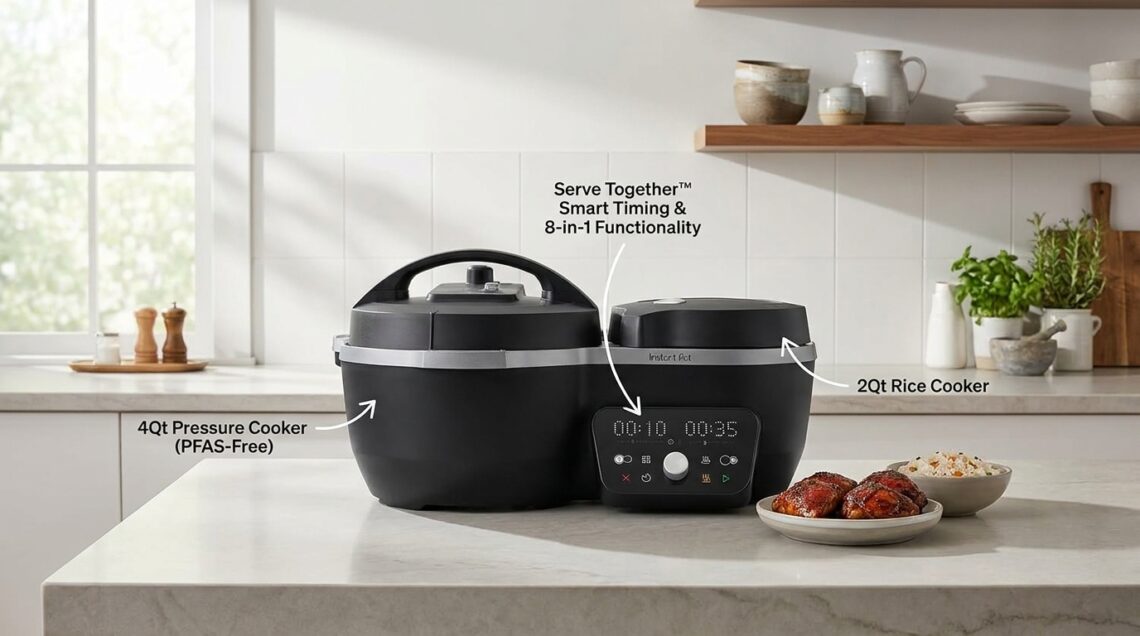
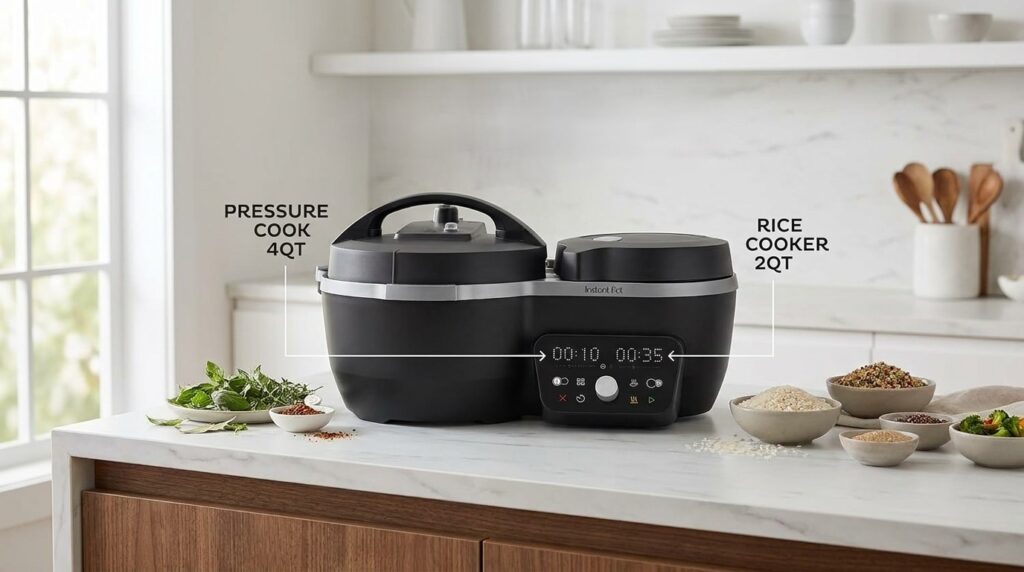
The Instant Pot Dual Action 8-in-1 Multi-Cooker was designed around that specific problem. Rather than functioning as a single pressure cooker with a long list of settings, it physically combines two separate cooking chambers—a 4-quart pressure cooker and a 2-quart rice cooker—into one countertop appliance. The idea is straightforward: cook a main dish and a side dish simultaneously, using two different cooking methods, without needing two separate machines or a full stovetop.
This article walks through what the appliance actually offers, how people tend to use it, who it’s likely to fit well, and what’s worth thinking about before adding it to a kitchen.
Key Features
Dual Cooking Chambers
The defining feature of this multi-cooker is its two-in-one design. Instead of one pot that switches between functions, it has a 4-quart pressure cooking side and a smaller 2-quart rice cooker side built into the same unit. This allows two different foods, using two different cooking methods, to be prepared at the same time rather than sequentially.
Serve Together Smart Timing
Because the two chambers can require different cook times, the multi-cooker includes a timing feature designed to help both dishes finish around the same time. In practice, this means a person can set a longer-cooking main dish and a shorter-cooking side, and the appliance manages the timing so that neither one is sitting around getting cold—or worse, still cooking—while the other is ready to eat.
Eight Functions in One Appliance
As the “8-in-1” name suggests, the unit is built to handle a range of cooking styles beyond just pressure cooking and rice preparation. Common functions on multi-cookers in this category typically include:
- Pressure cooking for fast, sealed-in cooking
- Rice cooking, tailored to different rice and grain types
- Sautéing, for browning meat or softening vegetables before other steps
- Slow cooking, for low-and-slow meals like stews or shredded meats
- Steaming, often used for vegetables or dumplings
- Keeping food warm after cooking is complete
Having these functions built into a single device means fewer specialized appliances taking up cabinet and counter space.
PFAS-Free Pot Construction
The product is noted as using a PFAS-free pot*, which refers to the interior cooking pot being made without per- and polyfluoroalkyl substances, a category of chemicals that has drawn increasing scrutiny in cookware manufacturing. This detail matters to shoppers who are actively trying to reduce their exposure to certain synthetic coatings in the kitchen. As always, it’s worth checking the manufacturer’s official product page for the specific asterisked disclaimer and any material details tied to that claim.
Compact Footprint for a Two-in-One Design
Despite combining two cooking vessels, the unit is designed to occupy roughly the same counter space as a typical single multi-cooker, which is a meaningful consideration for kitchens where space is limited.
How It Can Be Used
The core appeal of this appliance is flexibility around mealtime, not just speed. Some practical ways people tend to use a dual-chamber cooker like this include:
Weeknight dinners with a starch and a protein. A classic example is cooking rice in the smaller chamber while a curry, chili, or braised meat cooks under pressure in the larger one. Both finish close to the same time, which mimics how a stovetop meal would typically come together—just without needing to watch two pots.
Meal prepping for the week. Because the rice cooker side can handle grains like quinoa, brown rice, or oats, and the pressure cooker side can handle beans, shredded chicken, or soups, a single session can produce two separate meal-prep components at once.
Batch cooking sides separately from mains. Someone hosting a small gathering might use the rice side for a pilaf or risotto-style dish while using the pressure side for a larger cut of meat, effectively cutting the total active cooking time in half compared to doing each dish separately.
Everyday functions beyond pressure cooking. The sauté function is often used to brown aromatics like onion and garlic directly in the pot before switching to pressure or slow cook mode, which can reduce the number of dishes needed for a single recipe. The slow cook setting extends the appliance’s use to dishes that benefit from long cook times, such as pulled pork or bone broth.
Steaming vegetables or proteins. The steaming function offers a hands-off way to prepare items like broccoli, dumplings, or fish without needing a separate steamer basket setup on the stove.
Who It May Be Suitable For
This type of multi-cooker tends to appeal to a fairly specific set of households and cooking styles, including:
Busy families juggling multiple meal components. Households that regularly cook a “main plus side” style meal—rice and a protein, for example—may find the two-chamber approach cuts down on the number of pots and pans used per meal.
People with limited kitchen space. Combining what would otherwise be two separate appliances (a rice cooker and a pressure cooker) into one unit can be useful in apartments, dorms, or smaller kitchens where counter space is at a premium.
Home cooks who value hands-off cooking. Because pressure cooking and slow cooking are both largely unattended once set, this appliance may suit people who want to start a meal and step away, rather than actively monitoring the stove.
Those interested in reducing exposure to certain nonstick chemicals. Shoppers specifically looking for PFAS-free cookware options may find this feature relevant to their kitchen preferences.
People who cook for varying schedules. Since the Serve Together timing feature is built to sync two different cook times, it may particularly help households where family members eat at slightly different times but still want a freshly cooked meal.
That said, it may be less necessary for a single person cooking small portions regularly, or for someone who primarily cooks one dish at a time and doesn’t need the dual-chamber functionality.
Important Things to Consider
No kitchen appliance is a universal fit, and there are a few practical points worth thinking through before purchasing.
Capacity limits. The 4-quart pressure cooker side and 2-quart rice cooker side are both on the smaller end compared to standalone multi-cookers, which often range from 6 to 8 quarts. This size is generally suited to smaller households or side-dish portions rather than cooking for a large gathering in a single pressure-cooked batch.
Learning curve for dual timing. Coordinating two different recipes to finish together is a genuinely useful feature, but it does require getting familiar with how the Serve Together timing system works, including cook times for different foods. Like most pressure cookers, there may be an adjustment period for people new to pressure cooking in general.
Cleaning two chambers. Because there are two separate pots and lids involved rather than one, cleanup may take slightly more time compared to a single-pot multi-cooker, even though each individual component is generally manageable.
Countertop space and storage. While the unit is designed to be compact relative to owning two separate appliances, it is still larger than a single small rice cooker or a compact pressure cooker on its own, so measuring available counter or storage space beforehand is a reasonable step.
Understanding the PFAS-free claim. As with any manufacturer claim, it’s worth reviewing the specific language Instant Pot uses regarding the PFAS-free pot, including which components the claim applies to, directly on the official Amazon or Instant Pot product page before making assumptions about full appliance materials.
Comparing General Categories of Cooking Appliances
To put this type of multi-cooker in context, it helps to compare it against other general categories of kitchen cooking appliances, without focusing on any specific competing brand or product.
Standalone pressure cookers typically offer larger single-chamber capacity, which can be useful for big-batch cooking or larger families, but they only cook one dish at a time.
Standalone rice cookers are often simpler and sometimes more specialized for rice and grains specifically, with programmed settings for various rice types, but they don’t offer pressure cooking, sautéing, or slow cooking functions.
Traditional slow cookers are well suited to low-and-slow dishes and are generally simple to operate, but they lack the speed of pressure cooking and don’t offer a second cooking chamber.
Dual-chamber multi-cookers, as a category, aim to bridge these gaps by combining more than one cooking method into a single appliance, generally trading some capacity size for the convenience of simultaneous cooking. This category tends to suit people prioritizing meal timing and space efficiency over maximum batch size.
Each category has trade-offs, and the right choice generally comes down to household size, typical meal structure, and how much counter or storage space is available.
Frequently Asked Questions
Can both chambers be used at the same time for different cook times? Yes, that is the core function of the Serve Together Smart Timing feature—it’s built to help synchronize two different recipes so they’re ready around the same time, even if their individual cook times differ.
Is this appliance only useful for pressure cooking? No. It’s marketed as an 8-in-1 device, meaning it typically includes functions like sautéing, slow cooking, steaming, and keeping food warm, in addition to pressure cooking and rice cooking.
How much food can it realistically cook at once? With a 4-quart pressure cooker and a 2-quart rice cooker, the appliance is generally suited to smaller households or side-dish-sized portions rather than large-batch cooking for bigger gatherings.
What does “PFAS-free pot” mean exactly? It generally refers to the interior cooking pot being manufactured without per- and polyfluoroalkyl substances, a group of synthetic chemicals sometimes used in nonstick coatings. Specific details and any applicable disclaimers are best confirmed on the official product listing.
Does it take up more counter space than a regular multi-cooker? It’s designed to be relatively compact given that it includes two cooking chambers, though it will generally be somewhat larger than a single-chamber multi-cooker of comparable pressure-cooking capacity.
Is it dishwasher safe? Cleaning instructions and dishwasher compatibility for specific components can vary, so checking the product manual or the official listing for care instructions is the most reliable way to confirm this.
Conclusion
The Instant Pot Dual Action 8-in-1 Multi-Cooker is built around a fairly specific, practical idea: that a lot of home cooking involves preparing more than one dish at a time, and that most kitchen appliances aren’t designed to handle that reality efficiently. By combining a 4-quart pressure cooker with a 2-quart rice cooker and adding timing coordination between the two, it offers a different approach to weeknight meals compared to a traditional single-pot multi-cooker.
Whether it’s the right fit depends largely on household size, available counter space, and how often a “main plus side” cooking style fits someone’s routine. For households that regularly need to prepare two components of a meal at once, it may simplify the process. For those who usually cook single dishes in larger batches, a standalone appliance with greater capacity might align better with their needs.
As with any kitchen appliance purchase, reviewing the full specifications, dimensions, and included accessories on the product listing is a useful step before deciding if it fits your kitchen and cooking habits.