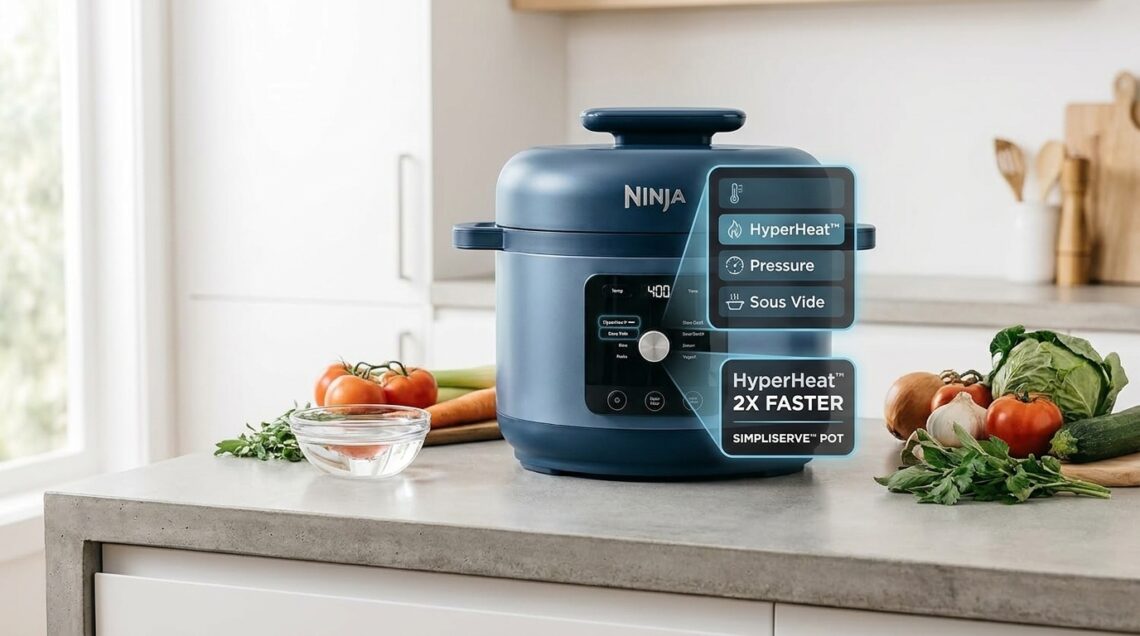
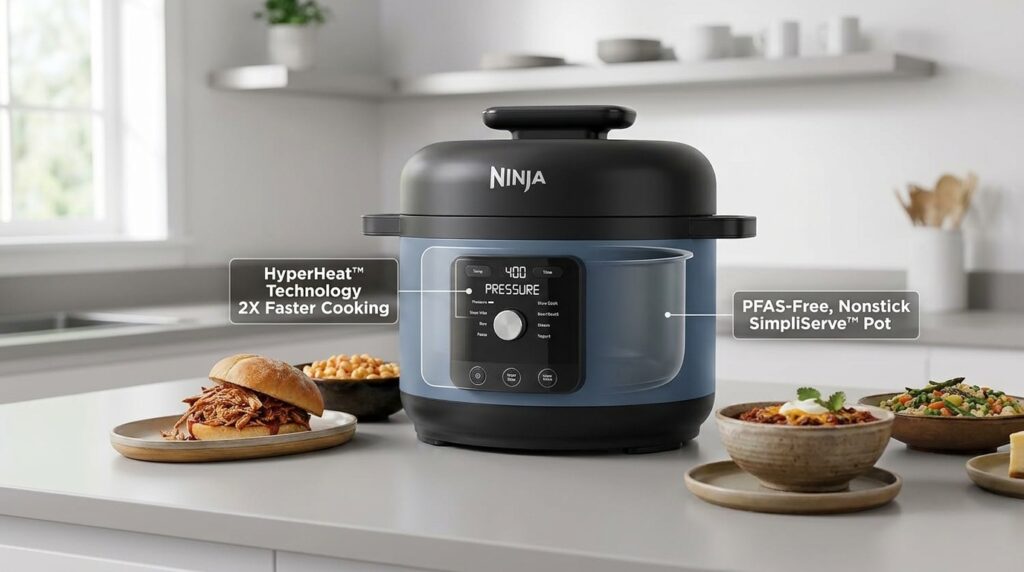
Kitchen appliances have gone through a quiet revolution over the past decade. What used to require five or six separate gadgets—a pressure cooker, a slow cooker, a steamer, a sauté pan, and a searing skillet—has increasingly been condensed into single, countertop-friendly machines. The Ninja HyperHeat 9-in-1 Pressure Cooker (model PC201, 6.5-quart capacity, shown in the Blue Macaron colorway) is one example of this trend, aiming to combine multiple cooking functions into a single 1200-watt unit.
This article walks through what this appliance offers, how it might fit into different kitchens and cooking styles, and what to think about before adding one to your countertop. It’s meant to be an informational resource rather than a sales pitch, so you can weigh the details against your own needs.
What Is the Ninja HyperHeat 9-in-1 Pressure Cooker?
At its core, this is a multi-function cooker that combines pressure cooking with several other common cooking methods. Ninja markets it under the “HyperHeat” name, which refers to the appliance’s heating technology designed to raise cooking temperatures more quickly than some conventional electric pressure cookers. According to the product listing, this can translate into meals that come together roughly twice as fast in certain functions compared to standard pressure cooking methods.
The 6.5-quart pot size positions it in a mid-to-large capacity range—big enough for family-sized meals or batch cooking, while still being manageable for most kitchen counters and storage spaces.
Key Features
HyperHeat Technology
The defining feature of this model is its heating system, which Ninja states is engineered to reach pressure-cooking temperatures faster than typical designs. Faster heat-up time can matter for weeknight cooking, when the total time from “start” to “plate” is often just as important as the cooking method itself.
Nine Cooking Functions in One Unit
Rather than being limited to pressure cooking alone, this model reportedly offers nine functions, which commonly include:
- Pressure Cook – for tenderizing tougher cuts of meat, cooking grains, and preparing stews or soups in less time than conventional stovetop methods.
- Sear/Sauté – useful for browning meat or softening aromatics like onions and garlic before switching to another cooking mode.
- Slow Cook – for low-and-slow meals such as pulled pork, chili, or braised dishes.
- Steam – suited to vegetables, dumplings, or fish where gentle, moisture-retaining heat is preferred.
- Sous Vide – a more precise, temperature-controlled method typically used for consistent doneness in proteins.
- Additional functions may include rice cooking, yogurt-making, warming, and searing, though exact naming can vary slightly by retailer listing.
Having these functions in a single housing means fewer appliances taking up cabinet or counter space, and potentially less cleanup since you’re not moving food between different pots and pans for each stage of a recipe.
PFAS-Free Pot Construction
The inner pot is described as PFAS-free, referring to a class of synthetic chemicals sometimes used in non-stick coatings. This has become a increasingly common point of interest for households paying closer attention to the materials used in cookware. It’s worth noting that “PFAS-free” refers specifically to that class of chemicals and isn’t a claim about the pot being non-stick-free or free from other coatings entirely—checking the specific material composition on the product listing or manufacturer’s site can offer more clarity if this is a priority for you.
SimpliServe Removable Pot
One detail that stands out in the design is the “SimpliServe” pot, which is built to be removable and, based on the name, apparently designed with serving in mind—rather than requiring you to spoon food out of a deep insert while it’s still seated in the base. This can be a small but meaningful convenience during meal times, particularly for dishes like stews, rice, or braises that are easier to portion when the pot can be lifted and placed directly on the table.
1200-Watt Power Rating
The unit runs on 1200 watts, which is a fairly standard wattage range for countertop multi-cookers of this size. Wattage alone doesn’t tell the whole story of cooking performance—pot design, heating element placement, and insulation all play a role—but it does give a general sense of the appliance’s energy draw and heating capability.
How It Can Be Used
Multi-function cookers like this one are often chosen because they adapt to a variety of cooking styles and meal types. Here are some practical ways this kind of appliance tends to get used in everyday kitchens:
Weeknight meals: The pressure cook function can significantly cut down cooking times for dishes like beans, lentils, pulled chicken, or pot roast, which traditionally take a long time using stovetop or oven methods.
Batch cooking and meal prep: The 6.5-quart capacity allows for larger portions, which can be useful for people who cook once and eat across several days, or for families who need to prepare food in bulk.
One-pot recipes: Because the appliance can sauté, pressure cook, and warm within the same pot, recipes that involve browning meat before stewing it can be done without switching vessels—reducing both cooking time and dishwashing.
Slow-cooked dishes on a schedule: The slow cook setting allows for the more traditional “set it in the morning, come home to dinner” approach, which some people prefer for texture and flavor development in certain dishes.
Precision cooking: The inclusion of a sous vide function suggests this model is aimed at users who want more control over doneness, particularly for proteins like steak, chicken breast, or eggs, where consistent temperature can affect texture significantly.
Steaming vegetables or seafood: For those trying to preserve nutrients and texture in vegetables, or gently cook delicate proteins like fish, the steam function offers an alternative to boiling or sautéing.
Making yogurt or grains: If the unit includes a yogurt or rice-specific setting, it opens up additional uses beyond savory cooking, potentially replacing a dedicated yogurt maker or rice cooker for some households.
Who It May Be Suitable For
This type of appliance tends to appeal to a fairly broad range of home cooks, though there are certain groups who might find it particularly useful:
Busy households and families looking to cut down on cooking time without sacrificing homemade meals may appreciate the faster heating and multiple built-in functions.
People consolidating kitchen appliances, especially those in smaller kitchens or apartments where counter and storage space is limited, might find value in replacing several single-purpose gadgets with one unit.
Home cooks interested in meal prepping for the week may benefit from the larger 6.5-quart capacity, which supports bigger batches.
Those exploring sous vide cooking without wanting to invest in a separate immersion circulator setup might find the built-in sous vide function a more accessible entry point.
People mindful of cookware materials may appreciate the PFAS-free construction, though it’s worth doing independent research on all materials used if this is a top priority.
On the other hand, this may be less suitable for someone who already owns several dedicated single-function appliances they’re happy with, or someone with very limited kitchen storage who would struggle to find a place for a fairly substantial countertop unit.
Important Things to Consider
No appliance is a perfect fit for every kitchen, so here are a few practical points worth thinking through before deciding if this model aligns with your needs.
Counter and Storage Space
At 6.5 quarts, this isn’t a compact appliance. Before purchasing, it’s worth measuring your available counter space or storage cabinet to make sure it will comfortably fit, particularly if you plan to keep it out on the counter rather than stowing it away between uses.
Learning Curve for Multiple Functions
With nine different functions, there may be a bit of a learning period as you get familiar with how each setting works, particularly for functions like sous vide that require more precise temperature and timing knowledge compared to basic sautéing or steaming. Reading through the included manual and perhaps watching a few tutorial videos can help shorten this adjustment period.
Maintenance and Cleaning
Removable pots, like the SimpliServe insert mentioned in the listing, are generally easier to clean since they can often go into a sink or dishwasher (always check manufacturer guidance on dishwasher safety for specific parts). However, multi-cookers with sealing rings, valves, and multiple components may require more thorough cleaning routines compared to simpler appliances, so factoring in maintenance time is reasonable.
Electrical Considerations
At 1200 watts, this appliance will draw a meaningful amount of power, similar to many other countertop cooking appliances. If you’re using multiple high-wattage appliances at once on the same circuit, it’s worth being mindful of your kitchen’s electrical capacity.
Understanding “2X Faster” Claims
Marketing language around speed, such as cooking “2X faster,” typically refers to specific comparisons made under particular conditions—for instance, comparing pressure cook heat-up time to a standard (non-HyperHeat) pressure cooker function. Actual cooking times will still vary based on the recipe, quantity of food, and starting temperature of ingredients, so it can be helpful to view such claims as general guidance rather than a fixed guarantee across every dish.
Comparing General Categories of Cooking Appliances
To put this type of product in context, it can help to compare general categories of kitchen appliances rather than specific competing brands.
Multi-function cookers vs. single-purpose appliances: A dedicated slow cooker or standalone pressure cooker may perform its one job with a simpler interface and potentially less to think about, but you would need separate units for searing, steaming, or sous vide. Multi-function cookers consolidate these into one unit, trading some specialization for versatility and space savings.
Electric pressure cookers vs. stovetop pressure cookers: Stovetop pressure cookers often reach higher pressure levels and can offer more direct control for experienced users, but they require more hands-on monitoring. Electric versions, including this one, tend to prioritize convenience, programmability, and safety features like automatic pressure release and locking lids.
Built-in sous vide vs. standalone immersion circulators: A dedicated sous vide immersion circulator, used with a separate water container, often provides very precise and adjustable temperature control, favored by cooking enthusiasts who do this often. Built-in sous vide functions in multi-cookers, by contrast, offer convenience and a lower barrier to entry, without needing extra equipment, though they may have a narrower range of temperature precision depending on the model.
Non-stick coated pots vs. PFAS-free formulations: Traditional non-stick coatings have historically used PFAS-based chemicals for their non-stick properties. As awareness around these chemicals has grown, more brands have shifted toward PFAS-free formulations, which may use different materials or coating technologies to achieve similar non-stick performance. It’s reasonable for shoppers to research the specific materials used in any PFAS-free product to understand how it compares functionally to older coatings.
Frequently Asked Questions
Does this pressure cooker replace a slow cooker entirely? Since slow cooking is one of the built-in functions, it can serve that purpose for many households. However, dedicated slow cookers sometimes offer larger capacities or simpler interfaces geared purely toward that one function, so the right choice depends on your specific cooking habits.
Is sous vide cooking difficult to learn? Sous vide cooking involves sealing food (often in a bag) and cooking it in temperature-controlled water for an extended period. It has a bit of a learning curve compared to more familiar methods, but many people find it manageable once they understand the basic principles of time and temperature for different proteins.
Can the inner pot go in the dishwasher? This can vary by specific model and part. It’s best to consult the included user manual or Ninja’s official care instructions, since not all components (such as sealing rings or the outer housing) may be dishwasher-safe even if the pot itself is.
What does “PFAS-free” mean for cooking safety? PFAS refers to a group of synthetic chemicals that have raised health and environmental concerns in various studies. A PFAS-free pot means that particular class of chemicals wasn’t used in the pot’s construction. For a full understanding of all materials used, reviewing the manufacturer’s official product information is recommended.
How much food can a 6.5-quart pot realistically hold? Generally, a 6.5-quart capacity can comfortably serve four to six people, depending on the recipe. For soups, stews, and grains, this size tends to offer a good middle ground between small households and larger families, though very large gatherings might require multiple batches.
Does “cooks 2X faster” mean every recipe finishes in half the time? Not necessarily. This type of claim usually reflects a specific technical comparison, such as heat-up or pressurization time, rather than a blanket statement about every recipe. Overall cooking time still depends on the dish, quantity, and starting ingredient temperature.
Final Thoughts
The Ninja HyperHeat 9-in-1 Pressure Cooker represents a fairly comprehensive approach to countertop multi-cooking, combining pressure cooking, searing, slow cooking, steaming, and sous vide functionality into a single 6.5-quart unit. Its PFAS-free pot construction and removable SimpliServe design speak to two trends many home cooks care about: material transparency and everyday convenience.
Whether this particular model is the right fit depends largely on your kitchen space, how often you’d use each of its nine functions, and how comfortable you are exploring newer cooking methods like sous vide. As with any multi-function appliance, it’s worth weighing the benefits of consolidation against the learning curve and storage space required.